Judo Preview

The sport of judo heads back the country of its birth for this summer’s Paralympic Games in Tokyo. The nation that invented judo also owns the most gold and overall medals at the Paralympic Games with 30. The U.S. is close behind at 21, though just two of them are gold, both won at the Sydney Games in 2000. At Rio 2016, the U.S. brought home two bronze medals — one from Dartanyon Crockett and one from Christella Garcia. 

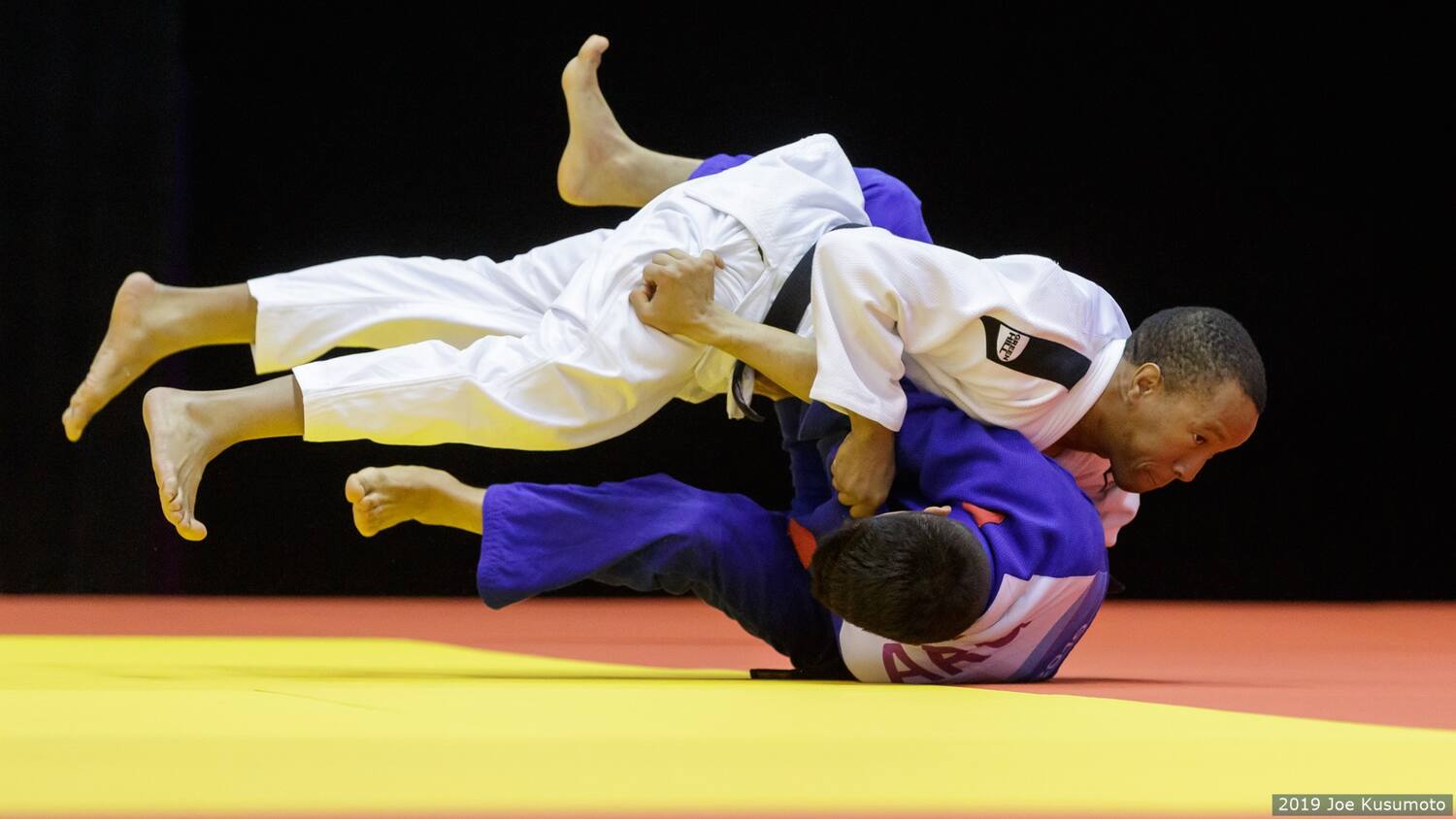
Judo has been on the Paralympic program since 1988, but was a men’s only event until 2004. At the Games, judo is contested solely by judoka who are visually impaired and the Paralympic version of the sport has just a few rules modifications compared to its Olympic counterpart. For instance, judoka must have a grip on their opponent’s judogi — a judo uniform — throughout the match. Athletes earn points and fractions of points for how they execute techniques.

The U.S. Paralympic judo team was announced in July 2021 and is based on the International Blind Sports Federation Tokyo 2020 Paralympic ranking list. Team USA qualified four judoka for Tokyo: Paralympian Ben Goodrich (100 kg.), Paralympian Katie Davis (70kg), Maria Liana Mutia (63 kg.) and Robert Tanaka (66 kg.).

Updated on July 20, 2021. For more information, contact the sport press officer.

If Team USA needs any advice on what it takes to get back to the top of the top of the Paralympic medal podium, it has a great resource. The team will be coached by the husband and wife team of Heidi and Stephen “Scott” Moore. Stephen is a three-time Paralympic medalist, including winning one of Team USA’s two judo gold medals in 2000.

This will be the first Paralympic judo competition since a rule change from the International Judo Federation made shortly after the 2016 Rio Games. Men’s matches were shortened by one minute so now both men’s and women’s matches are four minutes long. Also, scoring is now limited to only ippon (a full point, ending a match) and waza-ari (a half-point).

Ben Goodrich, 28, started his judo career in 2011 when he took a physical education elective course at the University of Minnesota. He enjoyed the class and enrolled at the North Star Judo Club. By 2014 he was competing at the world championships, and by 2016 he was making his Paralympic debut. Goodrich finished ninth in Rio, then went on to win silver at the 2018 Pan American Championships and a bronze at the 2019 Parapan American Games. Goodrich ranks fourth in the world in his weight class.

Maria Liana Mutia, 22, was born in the Philippines but later moved to Raleigh, North Carolina, where she was a standout wrestler at Millbrook High School. She began practicing judo in 2013 out of El Toro Judo Club in Raleigh. She now calls Chicago home. The No. 8 judoka in the world in her weight class, Mutia will be making her Paralympic debut.

Robert Tanaka, 21, has been a practicing judoka for 12 years and currently ranks 10th in the world. The Denver resident trains out of Ju Shin Kan Judo Academy in Colorado Springs, Colorado, but currently attends the University of Southern California. Tanaka is of Japanese descent and has said that qualifying for Tokyo is a lifelong goal.

Katie Davis, 35, joins the team for her second Paralympic Games in the +70kg weight class. The Sacramento, California, native made her Paralympic debut at London 2012. Her career with Team USA dates back to the 2010 world championships. Off the mat, Davis is a single mother of two and helps run a daycare. 

August 27, 2021: Paralympic competition begins with women’s 48 kg. and 52 kg. and men’s 60kg. and 66 kg.
August 28, 2021: Women’s 57 kg. and 63 kg. and men’s 73 kg. and 81 kg.
August 29, 2021: Men’s 90 kg., 100 kg. and +100 kg. and women’s 70 kg. and +70 kg.