

Training for triathlon encourages many positive physiological adaptations. Increased aerobic capacity, strength, coordination and mental fortitude are all benefits from participating in this incredible sport. Triathlon’s inherent cross-training provides a protective force against injuries that may frequently develop from a single sport focus.
As most triathletes have likely experienced, knee injuries can be painful and frustrating as well as downright irritating. Many productive training sessions, not to mention days filled with pain-free happiness, have been lost due to knee injuries in triathletes. Among injury rates in triathletes, the knee, low back and foot are the most prevalent.
Here are the most common knee injuries in triathletes not related to an outright trauma.| What? | Where? | Why? |
| Kneecap/Patellofemoral Syndrome/Runner’s Knee |
Pain felt on the underside and all around the border of the kneecap |
THIS IS |
| Iliotibial Band Syndrome |
Pain and tightness felt on the outside (lateral region) of the knee, usually near the joint line |
THE |
| Tendinitis |
Commonly just below the kneecap where the quad muscle attaches to the lower leg bone (tibia) |
MOST |
| Bursitis |
Pain felt most commonly on the inside (medial region) or posterior knee (popliteal fossa) |
IMPORTANT |
| Meniscus/Cartilage Deterioration |
Pain felt deep in the knee or along the joint margins |
QUESTION! |
The column on the far right in the table above, the why, is the really irritating and painful part of a knee injury. Often times, a visit to the doctor starts with the recommendation no triathlete wants to hear: “Stop.” It seems like a reasonable request at first, even if it’s something we don’t want to hear. If it hurts to do something, then stop doing it. Makes sense right? Not necessarily! Just stopping the activity that is painful is not really going to fix anything, and when you start training again, it will come right back.
The real fix is figuring out the why. You need to be a good investigator, or hire one. You also need to continue working on recovery and injury prevention long after all the pain is gone.Steps to crushing your knee pain and leaving it all behind
| 1. |
Understand the actual cause of your injury |
|
| 2. |
Structure training to allow yourself to recover |
|
| 3. |
Get rid of pain, inflammation and dysfunction |
|
| 4. |
Be patient, be consistent and be flexible |
|
| 5. |
Protect yourself from further injury |
|
Here are three amazing exercises to crush your knee pain or to help protect yourself from it. These exercises all work on strength, stability, balance, flexibility and proprioception (knowing where your body is in space). They all involve multiple muscles, varying ranges of motion for multiple joints and work large as well as smaller stabilizing muscles. These exercises also mimic the way the lower extremity muscles are used in triathlon, assisting in hardwiring the neuromuscular firing patterns required to be efficient and healthy.
Single-Leg Deadlifts
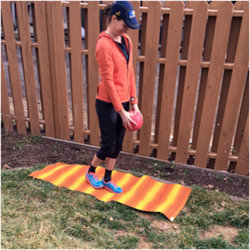
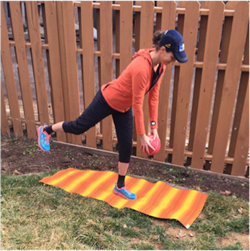
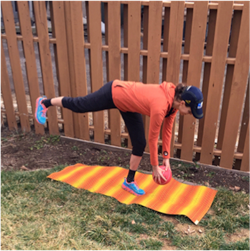
Stand up straight with shoulders down and back, stomach tight and hold a weighted ball, kettlebell or dumbbell on its end. Shift your weight to one leg with a soft bend in the standing leg. Hinge forward at the hips with a flat back to touch the ground with the ball then stand back up straight. Repeat 3x8 reps each leg.
Side Step-Ups
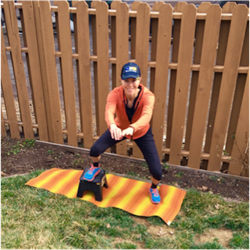
Place one foot on a step, toes forward, arms out in front and sit down as if a chair were behind you. Transfer your weight to the step-up leg and pull yourself up with control. Balance at the top on your step-up leg and, with control, lower back down. Ensure that the step-up leg is doing all of the work. Repeat 3x8 reps each leg.
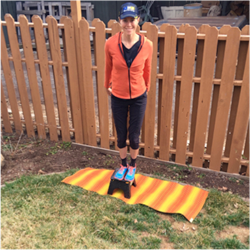
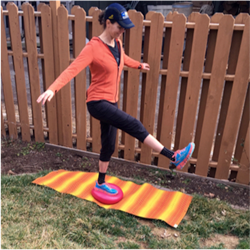
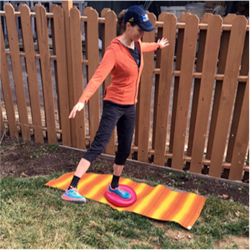
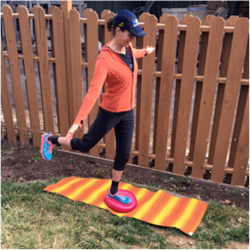
3-Way Hip Kicks with Instability
Stand up straight with your stomach tight and shoulders down and back while balancing on one leg. Use an air-filled disc, BOSU ball or foam for added instability. Keeping your back straight and hips level, kick slowly forward, side and back while keeping good control. Repeat 3x8 reps each leg.
The views expressed in this article are the opinion of the author and not necessarily the practices of USA Triathlon. Before starting any new diet or exercise program, you should check with your physician and/or coach.