Athlete Ombuds

DISPUTES THAT MAY BE FILED WITH THE USOPC

In addition to informal resolution and complaint procedures with a National Governing Body, the USOPC provides for specific avenues of redress where an athlete believes their opportunity to participate in protected competition (as defined in Section 1.3 of the USOPC bylaws) has been denied, or where a member seeks to compel an NGB to comply with the USOPC bylaws or the Ted Stevens Act.

Please note that matters involving field of play, anti-doping and those under the jurisdiction of the U.S. Center for SafeSport cannot be brought under the Section 9 complaint process. Click here for more information about these matters. 

Under Section 9 of the USOPC bylaws, no member organization of the USOPC may deny or threaten to deny an athlete the opportunity to participate in the Olympic, Paralympic, Pan American, Parapan American Games, a world championship competition, or other such protected competition, as defined within the USOPC bylaws.  

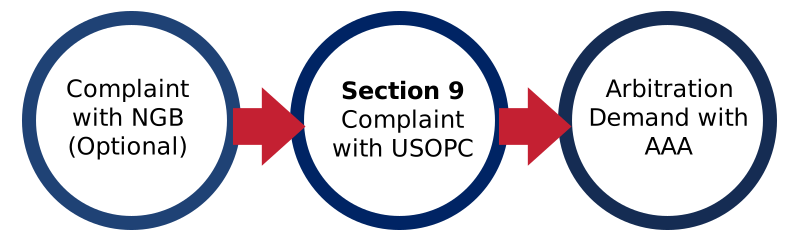
An athlete who believes that they have been denied this right may file a complaint with the NGB and proceed through their internal grievance process. The athlete may also file a Section 9 complaint with the USOPC, whether or not they have exhausted internal NGB remedies. 

The Section 9 complaint provides notice of the allegation to the NGB and the USOPC, at which point the Office of the Athlete Ombuds and/or USOPC staff may try to assist in mediating the dispute. At any point following the filing of a Section 9 complaint, the athlete may file for arbitration with the American Arbitration Association for a final and binding decision. Where the alleged denial impacts an imminent protected competition, the athlete may request for an expedited arbitration from the AAA.

Visual of a flowchart – step 1: complaint with NGB (optional) can lead to step 2: section nine complaint with USOPC which can lead to step 3: arbitration demand with AAA

There are several differences in choosing between an NGB process and the USOPC/AAA process:

  • In the case of an NGB complaint, there is generally a lower filing fee, a hearing panel with an athlete representative(s), a less formal process and the ability to appeal the decision (to the AAA). Check the NGB Bylaws for specifics, including filing fees and deadline.
  • There is no filing fee to file a Section 9 complaint with the USOPC, but it must be filed within 180 days of the alleged denial. If an athlete subsequently files a demand for arbitration with the AAA, there is a $1000 filing fee plus half of the arbitrator’s fees so, generally, an athlete would initiate the process with approximately $2000 and be required to pay for their own attorney’s fees. AAA cases are heard by a neutral AAA arbitrator, generally includes a more formal process with attorneys, and result in a final and binding decision. For past decisions and precedent, please visit the Section 9 archives here.

Under Section 10 of the USOPC bylaws, any person who belongs to an NGB or HPMO may seek to compel such NGB or HPMO to comply with the requirements of the USOPC Bylaws and the Ted Stevens Act.

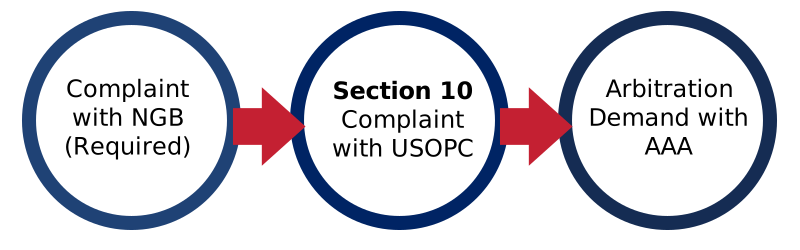
An individual who believes that their NGB or HPMO is out of compliance with the mandates set forth in the USOPC bylaws or the Ted Stevens Act must first file a formal complaint within the grievance procedures of the NGB. After all internal remedies have been exhausted, the individual may file a Section 10 complaint with the USOPC.

The parties may at any point of this process request mediation. As part of the Section 10 Complaint process, the USOPC appoints a hearing panel that will recommend to the USOPC board if the NGB (i) is in compliance, (ii) is not in compliance and NGB status should be revoked, (iii) should be on probation, or (iv) should face remedial actions to rectify any non-compliance.

Following a final decision, either party may file for a final and binding decision with the American Arbitration Association. For past decisions and precedent please visit the Section 10 archives here.

Visual of a flowchart – step 1: complaint with NGB (required) can lead to step 2: section ten complaint with USOPC which can lead to step 3: arbitration demand with AAA

Disclaimer: Please note that advice from any member of the Office of the Athlete Ombuds, including but not limited to information provided on this website, does not, and is not intended to, constitute legal advice. The Athlete Ombuds will offer neutral, independent advice to any athlete, and athletes should always seek legal counsel if they want specific legal advice or individual representation. See our homepage for our full disclaimer.